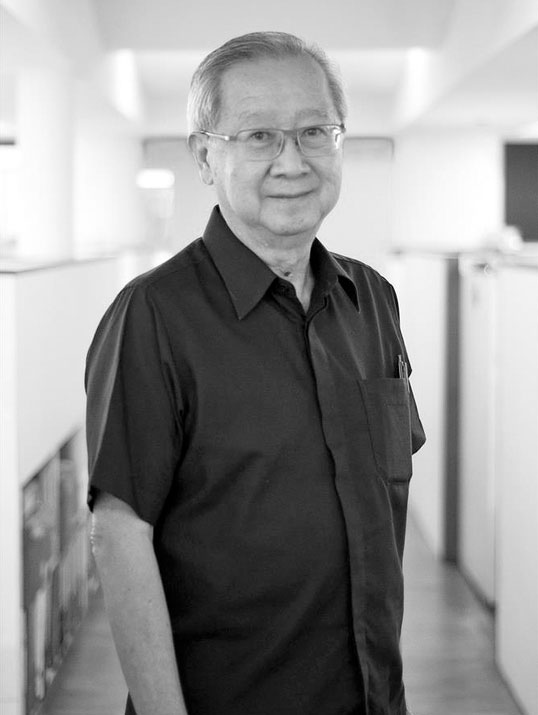
As the visionary co-founder of DP Architects and the creative force behind some of Singapore’s most iconic structural milestones—most notably co-designing the Esplanade – Theatres on the Bay—architect, art collector, and patron Koh Seow Chuan sits down with Muhammad Aljunied to discuss the evolution of Singapore’s urban skyline, the philosophy of contextual modernism, and the enduring intersection of architecture and cultural memory.
Muhammad Aljunied: Mr. Koh, looking back at the decades you spent steering DP Architects from a local Singaporean practice into a global powerhouse—and specifically conceptualizing cultural giants like the Esplanade alongside Michael Wilford—what was the core mission when shaping buildings that would define a nation’s identity?
Koh Seow Chuan: Architecture in a rapidly developing city-state like Singapore can never be created in a vacuum. When we started, the country was undergoing massive, necessary nation-building. But as we moved into the decades of major civic and cultural projects, the mandate shifted: we weren’t just building structures to house people or offices; we were building physical containers for a nation’s culture, soul, and future aspirations.
With a project like the Esplanade, the goal wasn’t to copy Western models or create a sterile glass box. It was to anchor a civic zone on the waterfront that felt bold, unmistakable, and deeply public. Architecture must speak to its time, but it must also respect how people move, gather, and feel within the space.
Muhammad Aljunied: The Esplanade famously went through an intense public evolution—from early skepticism over its unique double-dome and sunshade geometry to becoming the beloved “Durian” and the undisputed crown jewel of Singapore’s cultural district. How do you view public reaction when designing boundary-pushing architecture?
Koh Seow Chuan: If a building doesn’t challenge the eye or provoke a reaction when it is first unveiled, you haven’t done anything memorable. People are naturally resistant to the unfamiliar because humanity loves comfort and repetition.
When we were designing those twin domes, every technical detail—from the aluminum sunshades engineered to combat the brutal equatorial sun to the complex acoustic volumes of the halls—served a rigorous, functional purpose. We weren’t styling a gimmick; we were solving a complex climatic and urban challenge. Over time, once the public saw how the building breathed, interacted with the light, and welcomed millions of visitors into its open concourses, the architecture stopped being an abstract concept and became part of the city’s living fabric.
Muhammad Aljunied: Beyond architecture, you are globally renowned as an avid art collector and a passionate patron of the arts, having heavily supported Singaporean artists and cultural institutions throughout your life. How does your eye as an art collector influence your approach as an architect?
Koh Seow Chuan: They are two sides of the same coin. Both architecture and art are about composition, proportion, light, and emotional resonance. A great building is essentially a massive piece of habitable sculpture.
Collecting art taught me to look closer at texture, heritage, and the human story behind the craft. When you build a public space, you are curating an experience for thousands of people every single day. You have to care about the details that others might overlook—the way light enters a atrium, the flow of a pedestrian corridor, or how a structure ages gracefully against the elements.
Muhammad Aljunied: Looking across modern skylines today—not just in Singapore, but globally—what advice do you share with the next generation of architects and designers who are tasked with building the future?
Koh Seow Chuan: Stay authentic to your environment and never lose your curiosity. Too many modern projects chase fleeting trends or rely on computer-generated shortcuts without understanding the local context, the climate, or the people who will actually inhabit the space.
Architecture requires patience, grit, and a deep respect for humanity. Whether you are designing a massive performing arts center or an intimate public square, your work must have a purpose that outlives you. Build with courage, build with integrity, and always leave the city better than you found it.